Read this article in 中文 Français Deutsch Italiano Português Español
IPAF urges contractors to engage with new site requirements

12 November 2026
IPAF is reminding contractors to engage with rental companies and other mobile elevating work platform (MEWP) suppliers at the earliest possible stage when considering new site requirements for secondary guarding or other additional equipment.
The Federation said it fully supports initiatives to improve the safety of people using MEWPs, including measures designed to reduce the risk of entrapment and crushing. However, introducing new site requirements relating to secondary guarding or other additional equipment or devices fitted to MEWPs requires careful planning, and early communication across the equipment supply chain is essential.

“Rental companies and other MEWP suppliers need sufficient time to understand proposed requirements, assess the machines within their fleets, determine which systems are appropriate for different machine types and applications, and source the suitable equipment,” said IPAF. “They must also be able to assess and budget for the associated procurement and implementation costs, and plan and arrange installation across their fleets where necessary.”
IPAF added, “Requirements introduced at short notice can create significant practical and financial challenges, particularly where changes affect large numbers of machines. Availability of suitable equipment, manufacturer guidance, installation capacity, costs and the time required to modify individual machines must all be considered.”
Providing sufficient lead time
IPAF said it therefore strongly encouraged contractors to consult their MEWP suppliers at the earliest possible stage when developing new equipment or site-entry requirements, and to provide a reasonable implementation period before making them mandatory.
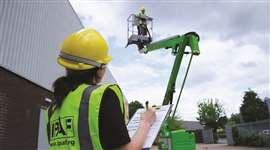
“Early engagement allows the supply chain to properly assess the requirements, budget and plan for any changes, and implement them in a controlled and consistent manner. Providing sufficient lead time also helps ensure that measures intended to improve safety can be introduced effectively, without creating unnecessary pressure on equipment availability or compromising the quality and consistency of implementation,” added IPAF
IPAF’s position remains that secondary guarding should form part of an appropriate risk-management approach, taking account of the MEWP, the task, the working environment and the foreseeable entrapment risks.
Contractors and suppliers are encouraged to read IPAF’s previous statement: Secondary Guarding Mandate for Scissor Lifts, for further information.
CONNECT WITH THE TEAM