Read this article in 中文 Français Deutsch Italiano Português Español
Kiloutou Italy MD: growth tactics in a changing market

15 June 2026
The Italian rental market is in a transitional phase and Kiloutou Italy is placed to take advantage of that shift, according to Andrea Lusvardi, Managing Director of Kiloutou Italy.
“The market is becoming a little bit more selective than it was in the past,” says Lusvardi, who took over the position at Kiloutou Italy in July last year, from Yann Canari, who spent 25 years as country manager.
“It has been, let’s say, drugged by incentives and all other supports which are not organic in the market. And because of that, there has been the development of a lot of small players which have compromised the competitive environment, because they don’t invest in structure, the safety and maintenance.”
Lusvardi is talking about some of the 7,000 small rental companies that exist in the country, a vast majority of which have appeared over the last five years, thanks in part to government subsidies and incentives, and are offering their services at a low cost.
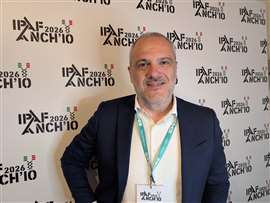 Andrea Lusvardi, Managing Director of Kiloutou Italy, at the IPAF Anch’io conference.
They range from companies with a single excavator up to firms of €5 million in turnover, with many of them being unstainable says Lusvardi, now that the market is not growing so quickly and key subsidies have come to an end.
“They saw the possibility of repaying a machine in two or three years, and everybody who had a little liquidity got involved in the market.”
On the subject of the Italian market Martin Seban, director of strategy and operations at KPMG France, which acts as consultant for the ERA’, said during the association’s annual conference in June, that southern Europe - Spain, Italy and Portugal - would see the fastest growth rate over the three years.
Italy has benefited from EU-funded investment, alongside the PNRR - National Recovery and Resilience Plan and ZES Special Economic Zone investment for Southern Italy in recent years.
Stability in Italy will be aided by the new Transition Plan 5.0 which will come into force in the coming weeks, with €10 billion through to September 2028, in support of the dual challenge of technological innovation and the green transition.
Battling a changing economy
But risks remain in the market, according to KPMG, with interest rates and energy disruptions from the wider European economy, tariffs and international conflict. Therefore, long-term visibility on projects remains uncertain, with no clear view on when the market will stabilize
And, out of Spain, Portugal and Italy, the latter is projected to see the lowest growth at 4.7% and 4.2% growth in 2026 and 2027, compared to the 2027 rise of 5.4% in Spain and 7.5% in Portugal, according to the annual European Rental Association’s (ERA) report released in June.
Putting that into perspective Lusvardi says the rental market in Italy has a maturity rating of about 10% compared to the UK or the US. “So, there is a huge area that still needs to be developed and converted.”
Expanding on the theme, Lusvardi says the immaturity of the market can be seen in how many of the new rental companies reacted to the opportunities as they saw them, particularly when consolidation become prevalent in the country.
“When consolidation came big groups like Kiloutou were looking for quick expansion and this became a business model for some of these small enterprises. They developed very fast, say 20%-30% per year - just inflating the EBITA value of the company in order to sell it.”
He adds, “That is one of the reasons why we are no longer looking for any companies that are less than €10 million anymore and have less than 10 years in the business. We have done it and we have seen what the risks of getting into business with somebody that has developed so fast can be, and we don’t want to do that anymore.”
In a booming market, as Italy has been in recent years, these small players thrive, says Lusvardi, “When the market is booming it creates a competitive tension for us, but when the market is more selective, like it is now, it is bad for them because we are capable of showing what makes the difference between us and them.
“That includes being a consultant to our customers and advising them, along with safety. We can demonstrate what they can’t provide. “Italy has had a strong market in the last five years – stronger than in other parts of Europe – which has allowed them to grow.
“But now the market is buffeted by the same pressures as others in the continent, such as the war in Ukraine and now the war in Iran.
The PNRR expired in February this year and while other subsidies are being introduced, explains Lusvardi, they will be focused on infrastructure, which requires very expensive, specialist machines that only big operators use.
“The market is going down a little bit,” he repeats, but again there are opportunities in an immature market. “There’s the possibility of turning people from purchase to rent, and this is a huge opportunity compared to more mature countries which are much further down that line.”
Fighting for survival
The current conditions means many of the new small rental outfits will not survive, Lusvardi believes. “We are receiving probably five to ten calls every day from companies that want to sell. They have grown their capex fleet very fast because they were excited about what was happening and now the demand for those let’s say average machines is dropping, so they are under financial pressure here.”
Beyond the 7,000 players in the country, there are five major rental companies in Italy, says Lusvardi, with the number one being Mollo, which is focused purely on the domestic market, rather than being one of the international groups.
Another peculiarity of the Italian market is that the number one rental company is Mollo - not an international group. As a family-owned business Mollo has a turnover of around €200 million and 6% of the market, followed by Venpa, which was also family owned until it was acquired by a French private equity firm.
“And then in third and fourth is Kiloutou and Loxam,” says Lusvardi, “But we have four to five percent of the of the market. All the others put together have 90% of the market.”
Of course, some of those 90% will survive. “Those that are in the localisation business and are close to their customers will survive but they won’t develop as fast as before and they will not be as attractive as they were before for companies like us.”
Kiloutou has been expanding quickly across Europe but with circumstances being so different in the Italian market, how does it plan to grow there?
“Acquisition and targets are always in our scope. As I mentioned, we have raised the bar for as far as acquisition are concerned and they have to be €10 million or more revenue companies, and they have to be in a geographical location where it makes sense for us instead of opening our own branches.”
Lusvardi adds, “Another leverage for us would be if we are capable of quickly widening our value proposition. So, for example, in Italy we are not promoting portable toilets. That could be something that we start to do but by buying somebody that is already in the market.”
In this way the company is looking to expand outside of the construction sector in Italy, as it has done in other markets, into less cyclical business segments.
“Our company started in in France with the French model of doing business, but then with the international growth we have somehow inherited a lot of insights and different ways of doing things from other countries.”
For example, says Lusvardi, “In Portugal, our company Vanda is number one in the toilet business, and we see how profitable that is, but we also see how difficult it is to get to that level.
“So, extending our value position here in Italy to provide toilets would only happen through an acquisition, while the regular business and geographical expansion can be probably done easier with direct organic growth.”
Another reason for choosing organic growth in the traditional rental market is that acquisition options are few and far between. “There are now very few remaining companies in our target €10 million and above area”.
Expansion plans
Looking to the near future, Kiloutou Italy would like to see its current annual revenue of €100 million grow to €300 million by 2030. That will come through potential acquisitions in new business sectors and capex investment.
For aerial lifts, there is a lot of scope for development says Lusvardi. “There are many areas where rental is not developed yet, and especially for aerials. For example, we are not touching industry yet - we are just in construction. But industrial applications offer stability, and the environmental sector is another area where we have not been focused.”
He adds, “For industrial we see the potential for aerial platforms more than anything else, along with environmental, energy and other lines of business that we are offering but not directly connecting to these segments.”
In Italy, Kiloutou’s assets are valued at €230 million which equates to 10,000 units, 40% of which are in the aerials segment, including MEWPs and telehandlers.
When it comes to the procurement of new products the group centrally selects the available options and general conditions of purchase, and then the individual country decides what local orders to make.
Chinese manufacturers are among those on the books. “Like in the automotive industry,” says Lusvardi, “They are becoming extremely reliable, and we have a testing centre in France where we test every single machine. While there was a restriction on equipment from the far east two three years ago, right now that kind of obstacle has gone.
“So, I think they are going to be major players. In the past, if you were a European manufacturer, it was an advantage but that’s not the case anymore.”
Another area of potential development in France is events, and again through acquisition because it requires specialist knowledge and existing contacts. “Then,” adds Lusvardi, “There’s the video surveillance business for job sites, that a lot of our key accounts are asking for, and we are talking to a couple of potential suppliers.”
Another developing business area is MEWP rental with an operator. “We are exploring this through an acquisition of a company that specialises in that.
“It is a growing and profitable business but also a pulling business for other businesses. So, we are we are investing in that, although and one issue there is going to be availability of operators.”
One way to alleviate the issue is to train delivery drivers to become operators, therefore fulfilling to roles for each individual. “This is the major limitation, and that’s the challenge but creating a pool of people that are multi-skilled – they can either be an truck driver or an operator.”
So, it seems the Italian market may have its uncertainties going forwards, but in an immature rental market there is always scope for an ethical player to find opportunities for growth.
STAY CONNECTED




Receive the information you need when you need it through our world-leading magazines, newsletters and daily briefings.


CONNECT WITH THE TEAM